
- News
- City News
- bengaluru News
- Making sense of Karnataka’s caste politics
Trending
This story is from March 23, 2024
Making sense of Karnataka’s caste politics
Caste dynamics heavily influence Karnataka's political landscape, with various dominant castes playing crucial roles in electoral outcomes. The state's parties strategically navigate these dynamics to secure broad community support and ensure victories in elections.
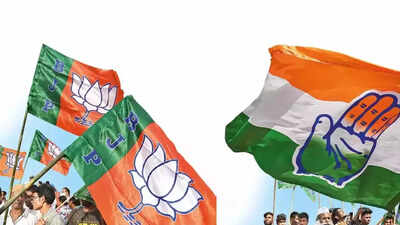
BJP and Congress
Dominant castes
While Lingayats hold sway in North Karnataka, Vokkaligas dominate Old Mysore region.

Ahinda’s influence
Despite the dominance of Vokkaligas and Lingayats, Siddaramaiah, a backward Kuruba leader, managed to clinch the chief minister’s post twice owing to his stronghold over the Ahinda vote bank. Ahinda, a Kannada acronym for the conglomerate of minorities, backward classes, and Dalits, proved instrumental in ensuring victories for Congress in both 2013 and 2023. Siddaramaiah championed their cause, advocating for social justice measures in both political and administrative spheres.
The big shift in 2023
The caste equation changed dramatically in the 2023 assembly polls, with Congress securing support of not only Ahinda, but also from Lingayats and Vokkaligas, contributing significantly to its victory.
Caste census report
While initially viewed as potentially advantageous by the Congress govt, publication of the report had to be postponed after the govt faced a severe backlash from both Lingayats and Vokkaligas. A leaked version of the report in 2018 suggested that populations of these communities were lower than estimated. Fearful of the potential impact in govt quotas and cabinet positions, both communities opposed the release of the survey. The electoral outcome will shed light on the extent of influence or damage to their prospects.
Pattern changes for Lok Sabha polls
JD(S), a strong force in Old Mysuru region, aligning with BJP has laid the foundation for another shift. JD(S) traditionally enjoys support of Vokkaligas, but failed to garner overwhelming support from the community in the 2023 assembly polls, largely due to DK Shivakumar’s aspiration of becoming CM. Now, BJP aims to lead among Lingayats and Vokkaligas, the two dominant castes, while Congress is projected to lead among SCs, STs, Kurubas, and Muslims.
Historical context
Vokkaligas, a prominent landholding community, held sway within Congress in the former Mysore state. However, following the state’s unification, Lingayats rose to prominence, dominating Congress and occupying chief ministerial positions until the late 1970s. The balance shifted significantly in 1990 when Prime Minister Rajiv Gandhi dismissed chief minister Veerendra Patil after a communal riot, prompting Lingayats to switch allegiance to BJP. It also paved the way for the emergence of HD Deve Gowda and his Janata Dal, which garnered Vokkaliga backing, leading to its emergence as a prominent player.
End of Article
FOLLOW US ON SOCIAL MEDIA







Photostories

Hot Picks
TOP TRENDING
Popular Categories
Hot on the Web
Top Trends
India Qualifying ScenarioBaba Siddique NewsPakistan Cricket TeamRussell WilsonsSpacex StarshipRahul DravidWho was Baba SiddiqueBabar AzamNTA SWAYAM July RegistrationLawrence BishnoiAmazon LayoffsTaylor SwiftManagement Colleges of IndiaTop Medical Colleges of IndiaTop Engineering Colleges of IndiaTop Pharmacy Colleges of IndiaLive Cricket Score
Trending Topics
Diwali WishesNara RohithBaba SiddiqueShraddha KapoorVettaiyan CollectionVettaiyan ReviewNatasa StankovicDevara CollectionBigg Boss 18Deepika PadukoneShraddha KapoorRatan Tata Passed AwayJigra Movie ReviewVettaiyan Movie ReviewSwatantrya Veer SavarkarDussehra 2024Star Health Hacker DemandedViral MemesUltimate Football Codes October 2024Wordle Answer
Living and entertainment
Latest News
10 deadliest snakes in Australia and know their venom toxicityOver 70 injured at Devaragattu Banni stick festival during Dussehra celebrationsPassion missing, players don’t want to work hard, lament former intl’sHow tomato, potato, onion influence food inflationExclusive: Aishwarya Khare recalls his childhood memories of Dussehra, says 'my father used to take us all to watch Ram Leela and Ravan Dahan'Biker’s death ignites village fury in Odisha's Boudh, massive traffic jam on NH-57Reliance Jio sends 'complaint letter' to telecom minister Jyotiraditya ScindiaWomen's T20 World Cup: Why India need Pakistan victory over New Zealand to secure semifinal berthCops probing Bishnoi gang's links to Siddique's murderKrushna Abhishek shares a heartwarming post for mama Govinda; says 'jab body mein adha blood supremely talented actor Govinda ka ho...'Papankusha Ekadashi 2024: Date, Parana Time, Puja Rituals and SignificanceNorth Korea preparing to demolish inter-Korean roads, claims South KoreaAI’S OppenheimerRajveer Singh’s inspiring transformation on completing a decade in the TV Industry, says 'My passion for becoming an actor fueled my determination'Former Pakistan PM Imran Khan's sisters shifted to Jhelum jail on judicial remand'I truly believe ... ': What police said after third assassination attempt on Donald TrumpHow Ratan Tata started India's romance with ZaraBaba Siddique murder case: Slum dispute that sparked ED inquest to be part of probe
Copyright © 2024 Bennett, Coleman & Co. Ltd. All rights reserved. For reprint rights: Times Syndication Service